
February 16, 2026
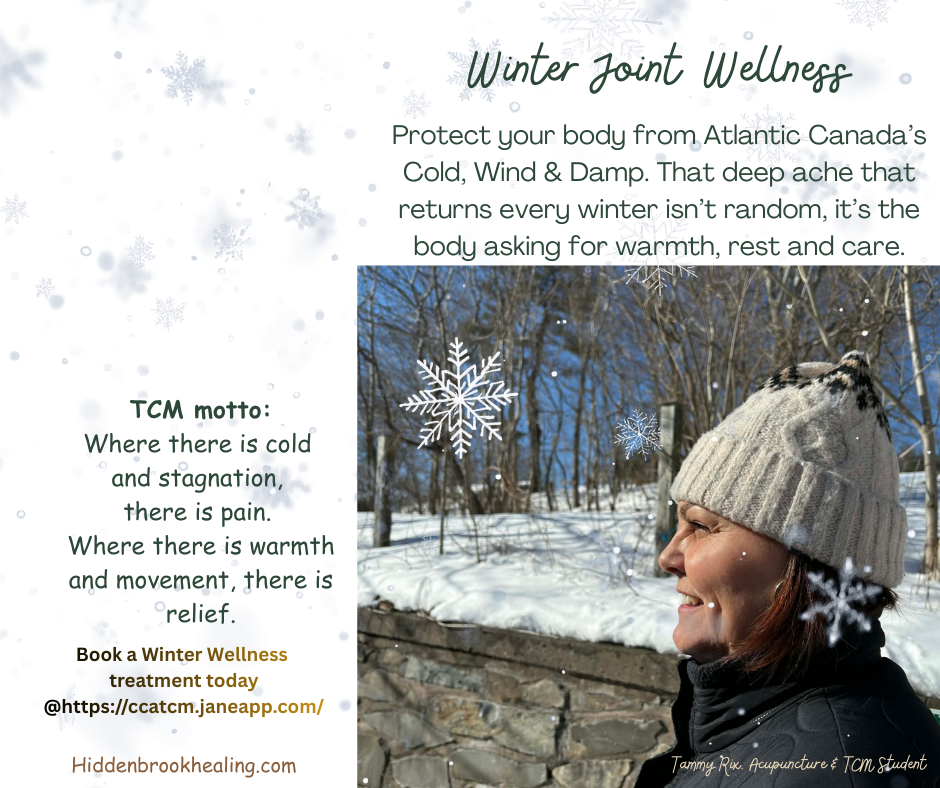
In Atlantic Canada, winter brings more than snow and cold. For many people, it also brings increased joint pain, stiffness, and deep fatigue. In Traditional Chinese Medicine (TCM), wind, cold, and dampness are understood as environmental factors that can enter the body and affect the muscles, tendons, and joints, especially when exposure is repeated or the body is already feeling run down. The good news is that there are simple, supportive ways to protect ourselves and stay more comfortable throughout the winter season.
Many people try to push through winter by staying active even when the weather is cold and damp. It’s common to hear advice to ice sore joints after activity. While ice may temporarily numb pain, discomfort often returns shortly afterward.
Through the lens of Traditional Chinese Medicine, this pattern begins to make sense. Cold causes the body to contract, which can reduce circulation. While icing may dull pain in the short term, it can also further slow the movement of blood and fluids in joints that are already cold and stiff. In TCM, pain is often associated with stagnation, and warmth is used to encourage circulation and restore flow. Warming an area helps ease stiffness and supports the body in addressing the root of the discomfort rather than simply masking symptoms.
Winter can have a profound effect on the joints. Wind is known for creating sudden, shifting aches and stiffness, often affecting areas such as the neck and shoulders. Cold tightens muscles and tendons, slowing circulation and worsening stiffness. Dampness contributes to a heavy, weighed-down sensation and is commonly associated with swelling and chronic joint discomfort, particularly in the knees, hips, and lower back.
For those living with conditions such as osteoarthritis, these patterns can feel very familiar. Cold, damp weather often aggravates symptoms, especially in the early morning hours. Tasks like climbing stairs, walking to the car, or standing for long periods can suddenly feel exhausting and overwhelming.
Because of this, winter is best approached as a season for protection rather than pushing through. Dressing warmly supports circulation, reduces strain on the joints, and helps the body defend itself. Covering the neck, lower back, knees, and ankles is especially important. Hats, scarves, and warm layers are not just stylish; they are supportive tools for joint health.
Atlantic Canada Winter Tips to Protect Your Joints
Winter is a season for care, not endurance.
- Keep the body warm and dry with layered clothing, scarves, gloves, and good socks
- Use warm baths, heating pads, cozy blankets, and comfortable indoor spaces to ease stiffness
- Choose gentle, regular movement such as walking, chair yoga, tai chi, or light stretching
- Nourish the body with warming foods like soups, stews, root vegetables, ginger, and cinnamon
- Opt for warm beverages such as herbal tea or warm water with lemon rather than icy drinks
Small daily habits can make a meaningful difference in how the body feels throughout the winter months.
Studying Traditional Chinese Medicine has given me a new understanding of why my body responds the way it does in winter, and it continues to shape how I care for myself and others.

WIND CHILL: THE CHILLING FACTS

Image source: Environment and Climate Change Canada (Government of Canada), used under the Open Government Licence.
Book a Winter Wellness treatment today @https://ccatcm.janeapp.com/
Leave a Reply